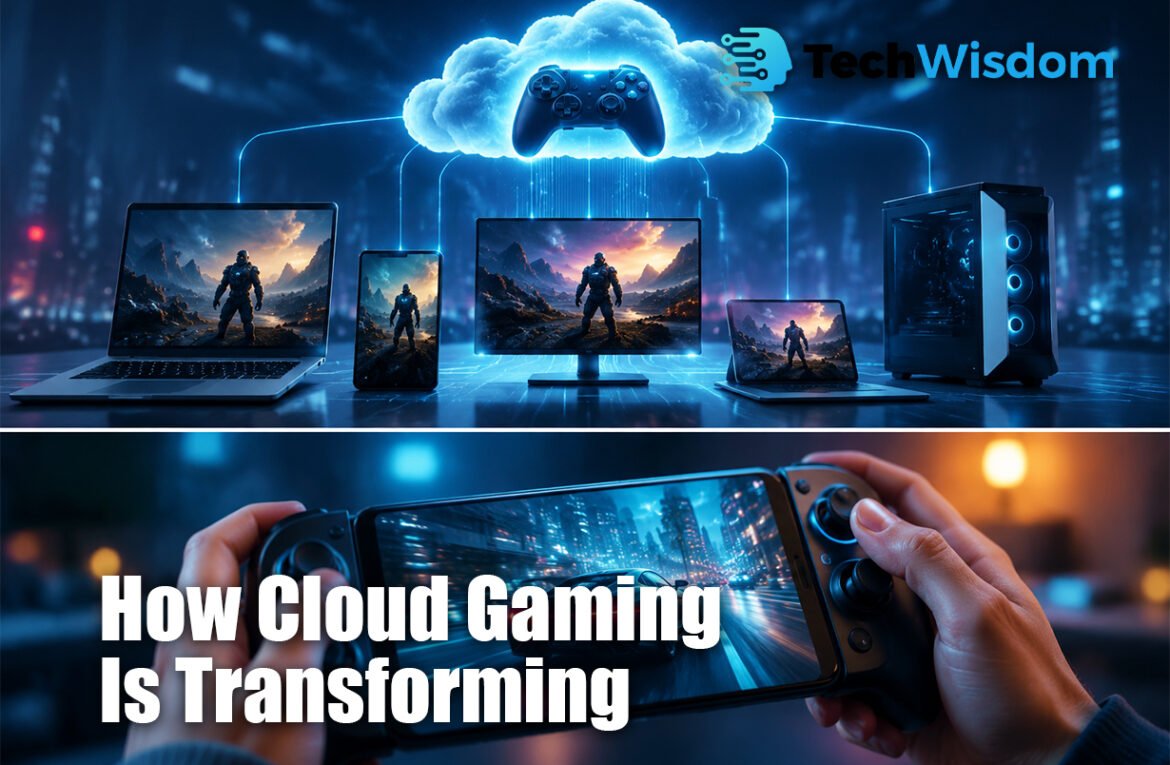
Cloud gaming is changing the way people experience video games by moving powerful gaming processes from personal devices to remote servers. How Cloud Gaming Is Transforming the next generation of gaming can be seen through faster access, lower hardware requirements, and more flexible gameplay experiences. Instead of buying expensive consoles or high-end PCs, players can now stream games through the internet using smartphones, laptops, tablets, and smart TVs. This technology is creating a future where gaming is more connected, accessible, and available to a wider global audience.
How Cloud Gaming Works and Why It Is Changing Gaming
Cloud gaming works by running video games on powerful data center servers instead of a player’s personal device. The server handles complex tasks such as graphics rendering, processing, and game performance. The player receives a live video stream while their controller inputs are sent back to the server instantly.
This approach is similar to video streaming platforms, but it requires extremely fast internet connections and low latency. Services like Xbox Cloud Gaming, NVIDIA GeForce NOW, and Amazon Luna are helping players access advanced games without downloading large files or upgrading hardware.
How Cloud Gaming Is Transforming the gaming industry is closely connected to this shift from device-based gaming toward service-based experiences. Players are no longer limited by the power of their own machines because cloud servers provide the necessary computing performance.
How Cloud Gaming Removes Hardware Limitations
One of the biggest changes created by cloud gaming is reducing dependence on expensive gaming equipment. Traditional gaming often requires powerful graphics cards, processors, storage systems, and regular upgrades to support new releases.
With cloud gaming, users can play advanced titles on devices that would normally struggle to run modern games. A basic laptop or smartphone can become a gaming platform because the heavy processing happens remotely.
This transformation makes gaming more affordable and helps new players enter the market. Instead of spending hundreds or thousands of dollars on hardware, users can access premium gaming experiences through subscription-based services.
How Cloud Gaming Improves Accessibility for Players
Cloud gaming is expanding access to video games by removing many traditional barriers. Players who cannot afford gaming consoles or powerful computers can still enjoy high-quality gaming experiences through internet-connected devices.
The technology also benefits users who prefer flexibility. A player can start a game on a television, continue playing on a smartphone, and finish on a laptop without losing progress.
How Cloud Gaming Is Transforming player accessibility shows how gaming is moving beyond traditional platforms. The focus is shifting from owning specific hardware to having instant access to digital entertainment.
How Cloud Gaming Enables Cross-Platform Gaming Experiences
Modern gamers expect their games to follow them across different devices. Cloud gaming supports this demand by creating connected ecosystems where users can access the same games from multiple platforms.
Players can enjoy smoother transitions between devices because game data, settings, and progress are stored in the cloud. This reduces restrictions between PC, console, and mobile gaming communities.
Companies are investing heavily in cloud infrastructure to create unified gaming environments. This approach allows developers to build experiences that are not limited by a single platform.
How Cloud Gaming Is Changing Game Development
Cloud gaming is not only changing how players access games; it is also changing how developers create them. Cloud servers provide developers with more computing power for designing larger worlds, advanced graphics, and complex multiplayer environments.
Developers can release updates faster because many improvements can happen directly through cloud systems. Players do not always need large downloads or manual installations to receive new features.
The rise of cloud technology encourages developers to think differently about game design. Future games may focus more on persistent online worlds, artificial intelligence, and real-time experiences.
The Role of AI, 5G, and Cloud Technology in Gaming’s Future
The growth of cloud gaming is strongly connected to emerging technologies such as artificial intelligence (AI) and 5G networks. AI can improve gaming through smarter characters, personalized recommendations, and automatic performance adjustments.
Meanwhile, 5G technology provides faster speeds and lower latency, which are essential for smooth cloud gaming. Faster networks allow players to enjoy more responsive gameplay, especially in competitive multiplayer titles.
Together, AI, 5G, and cloud computing are creating a foundation for the next generation of gaming. These technologies will continue improving graphics quality, connection stability, and player experiences.
Challenges Slowing Down Cloud Gaming Growth
Although cloud gaming has many advantages, it still faces several challenges. The biggest issue is internet dependency. Players need stable and fast connections to avoid problems such as lag, delays, or reduced video quality.
Latency remains another concern, especially for competitive games where every second matters. Even a small delay between player actions and server responses can affect performance.
Cloud gaming companies must also invest heavily in global data centers and network infrastructure. Expanding reliable services worldwide requires significant financial and technological resources.
How Cloud Gaming Will Shape the Future of Entertainment
The future of gaming is likely to become more cloud-focused as technology continues improving. Players may no longer think about gaming devices first; instead, they may focus on instant access to games anywhere.
How Cloud Gaming Is Transforming the future of entertainment can be seen through subscription models, digital libraries, and connected gaming ecosystems. The industry is moving toward a future where games become services rather than individual products.
As cloud infrastructure improves, gaming could become more immersive through virtual reality, augmented reality, and AI-powered experiences. The next generation of gaming will likely be defined by convenience, accessibility, and innovation.
FAQs About How Cloud Gaming Is Transforming the Next Generation of Gaming
1. What is cloud gaming and how does it work?
Cloud gaming allows players to stream video games from remote servers instead of running them directly on their devices. The server processes the game while users control gameplay through an internet connection.
2. How is cloud gaming transforming traditional gaming?
Cloud gaming is transforming gaming by reducing hardware costs, improving accessibility, enabling cross-device play, and creating new subscription-based gaming models.
3. Do I need a powerful computer for cloud gaming?
No. Cloud gaming reduces the need for expensive hardware because games run on remote servers. Users mainly need a compatible device and a stable internet connection.
4. What technologies support the growth of cloud gaming?
Major technologies supporting cloud gaming include 5G networks, artificial intelligence, cloud computing, and advanced data centers that improve speed and performance.
5. Will cloud gaming replace consoles and gaming PCs?
Cloud gaming may not completely replace consoles and PCs, but it will become an important alternative by offering more flexible and accessible gaming experiences.