Generative AI Models have become one of the most important technologies shaping the future of modern businesses. These advanced AI systems can create text, images, code, audio, and other digital content by learning patterns from large datasets. Unlike traditional software that follows fixed instructions, these models can understand user requests, generate creative solutions, and support employees in different tasks. Companies now use this technology to improve productivity, automate workflows, enhance customer experiences, and develop new digital products.
What Are Generative AI Models and How Do They Work?
Generative AI Models are artificial intelligence systems designed to generate new content based on the information they have learned during training. They use advanced machine learning techniques, especially deep learning and neural networks, to identify patterns in massive amounts of data.
These models analyze relationships between words, images, sounds, or code and use that knowledge to produce new outputs. For example, a language-based AI model can write reports or answer questions, while an image model can create visuals from simple text instructions.
The process starts with training, where AI systems learn from large datasets. After learning patterns, the model can process user prompts and create responses that match the given instructions. The quality of results depends on factors such as training data, model design, and human feedback.
Different Types of Generative AI Models Businesses Use Today
Businesses use different types of AI models depending on their goals and industry requirements. Each model category provides unique capabilities for solving specific challenges.
Large Language Models (LLMs) are among the most widely used systems. They specialize in understanding and generating human language. Companies use LLMs for customer support, content creation, document analysis, research assistance, and internal communication.
Image generation models allow businesses to create graphics, product designs, advertisements, and marketing visuals. These systems help creative teams develop ideas faster without requiring every asset to be created manually.
Video and audio generation models are becoming popular in advertising, entertainment, education, and training. They can create promotional videos, voice assistants, and digital learning materials.
Code generation models support software developers by creating programming suggestions, finding errors, and helping teams build applications more efficiently.
Key Features That Make Generative AI Models Powerful
One major strength of Generative AI Models is their ability to create different types of content quickly. Businesses can generate articles, product descriptions, reports, presentations, and customer messages within minutes.
Another important feature is natural language understanding. Modern AI systems can interpret complex instructions, maintain conversations, and provide responses based on context. This makes them useful for building smart assistants and automated communication tools.
Multimodal capabilities are also changing how companies use AI. Advanced models can understand multiple forms of information, including text, images, audio, and video. This allows businesses to analyze different data sources together and create more personalized experiences.
Customization is another valuable feature. Organizations can connect AI systems with their own databases, documents, and business information to create specialized solutions that match their needs.
How Generative AI Models Are Transforming Business Operations
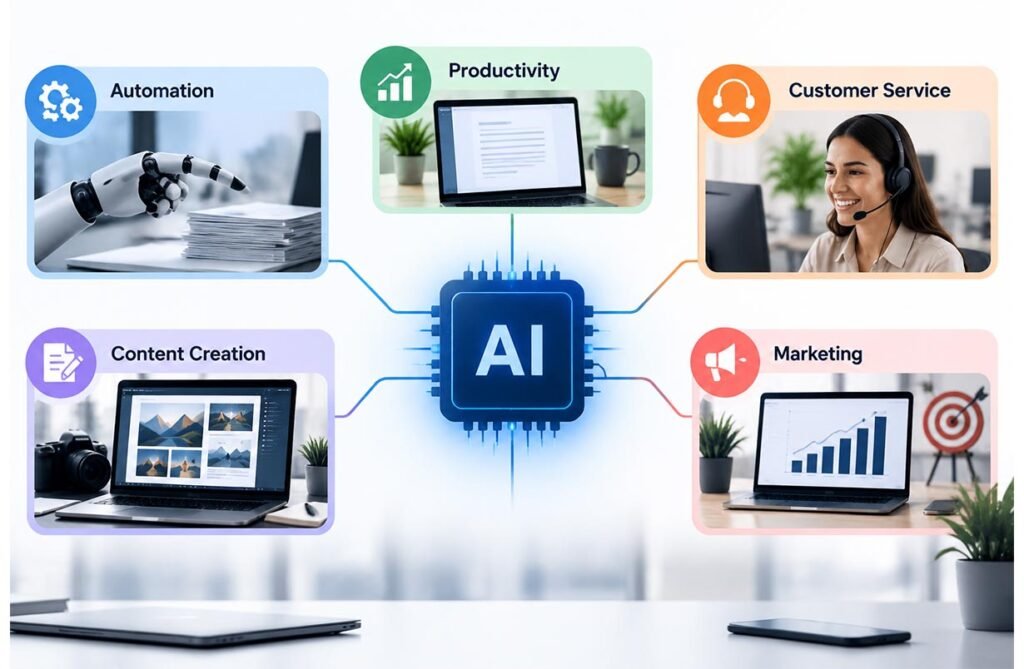
The impact of AI on business operations is growing rapidly. Companies are using these systems to automate repetitive work and allow employees to focus on more strategic activities.
In daily operations, AI can help create documents, summarize meetings, organize information, and prepare business reports. Employees can complete tasks faster while maintaining better workflow efficiency.
Customer service is another area experiencing major changes. AI-powered assistants can respond to common questions, provide instant support, and help customers find information at any time. Businesses can combine AI automation with human support to create smoother customer experiences.
Marketing teams are also using AI to develop campaigns, write content, analyze customer behavior, and create personalized messages. Generative AI Models: This helps brands reach audiences more effectively while reducing content production time.
Practical Business Applications of Generative AI Models Across Industries
Different industries are adopting AI technology to improve their services and operations.
In healthcare, AI systems assist with medical documentation, research analysis, and patient communication. They help professionals manage information while allowing more time for important tasks.
In finance, companies use AI for customer assistance, financial analysis, report generation, and improving internal processes. These systems help organizations handle large amounts of information efficiently.
In e-commerce, businesses use AI to create product descriptions, improve recommendations, and develop shopping assistants. Personalized experiences help companies better understand customer needs.
In education, AI supports personalized learning, automated content creation, and student assistance. Teachers and institutions can use these tools to improve learning resources.
Benefits of Using Generative AI Models for Companies
Businesses adopt AI technology because it provides several practical advantages. One of the biggest benefits is increased productivity. Employees can complete time-consuming tasks faster with AI assistance.
Cost reduction is another important advantage. Automation helps companies reduce manual workloads and improve operational efficiency.
AI also supports innovation by helping businesses test new ideas, create prototypes, and develop products more quickly. Teams can explore creative possibilities without spending excessive time on initial development.
Better customer experiences are another benefit. AI systems can provide personalized recommendations, faster responses, and improved communication across different platforms.
However, successful adoption requires businesses to combine AI capabilities with human expertise. Human review and decision-making remain important for achieving reliable results.
Challenges and Risks Businesses Face With Generative AI Models
Although AI provides many opportunities, businesses must also manage several challenges. One common issue is accuracy. AI systems can sometimes generate incorrect information, which means companies need verification processes before using AI-generated content.
Data privacy is another concern. Businesses must protect sensitive information and ensure that AI systems follow security standards.
Companies also need to consider ethical issues, including responsible AI usage, transparency, and copyright concerns. Clear policies help organizations use AI in a safe and effective way.
Implementation costs can also be a challenge. Developing customized AI solutions may require investment in technology infrastructure, skilled professionals, and ongoing maintenance.
How Companies Can Successfully Implement Generative AI Models
Successful AI adoption requires a clear strategy. Businesses should first identify areas where AI can create the most value instead of implementing technology without a specific purpose.
Companies should invest in quality data because AI performance depends heavily on the information used for training and customization.
Employee training is also essential. Teams need to understand how to work with AI tools effectively and recognize their limitations.
Strong security policies, human oversight, and regular performance reviews help organizations create reliable AI systems that support long-term business goals.
Future Trends of Generative AI Models in the Business World
The future of AI will likely focus on more advanced, specialized, and autonomous systems. Businesses are moving toward AI solutions designed for specific industries and workflows.
Future developments may include AI agents that can complete complex tasks independently, improved multimodal systems, and better integration with company platforms.
As technology continues evolving, businesses will increasingly use AI as a partner for creativity, analysis, and decision-making. Organizations that understand how to apply this technology responsibly can discover new opportunities and improve their digital capabilities.
FAQs
What are Generative AI Models used for in business?
Generative AI Models help businesses create content, automate tasks, improve customer service, analyze information, and support decision-making.
How do Generative AI Models create content?
These models learn patterns from large datasets and generate new outputs based on user instructions, prompts, and learned information.
Can Generative AI Models replace human employees?
AI can automate many repetitive tasks, but businesses usually use it as a support tool that works alongside human creativity and expertise.
What industries use Generative AI Models?
Industries such as healthcare, finance, education, e-commerce, marketing, and software development use AI models for different business solutions.
Are Generative AI Models safe for companies?
They can be useful when implemented with proper security, privacy controls, human review, and responsible AI policies.