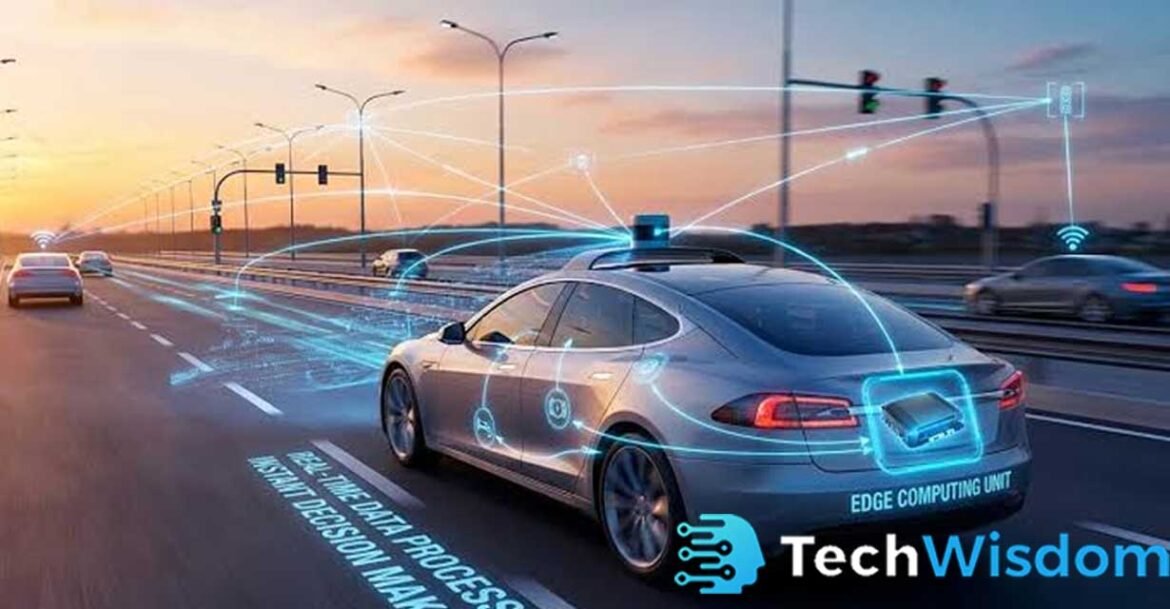
Self-driving vehicles are no longer just a futuristic idea. They are already being tested and used in different parts of the world, supported by advances in artificial intelligence (AI), sensors, and computing systems. One technology that plays a major role behind the scenes is edge computing. By processing information close to where it is generated, edge computing Edge Computing in Autonomous helps autonomous vehicles react faster, make smarter decisions, and drive more safely. As vehicles become increasingly connected and intelligent, this technology is becoming essential for reliable autonomous transportation.
What Is Edge Computing in Autonomous Vehicles?
Autonomous vehicles rely on a constant stream of information from cameras, LiDAR, radar, GPS systems, and other sensors. These devices collect data about road conditions, traffic patterns, pedestrians, and nearby vehicles.
Traditionally, much of this information would be sent to cloud servers for processing. While cloud computing remains important, it can introduce delays because data must travel back and forth through a network. Edge computing solves this problem by processing Edge Computing in Autonomous critical information inside the vehicle or at a nearby computing node. This allows decisions to be made almost instantly.
Why Real-Time Processing Matters on the Road
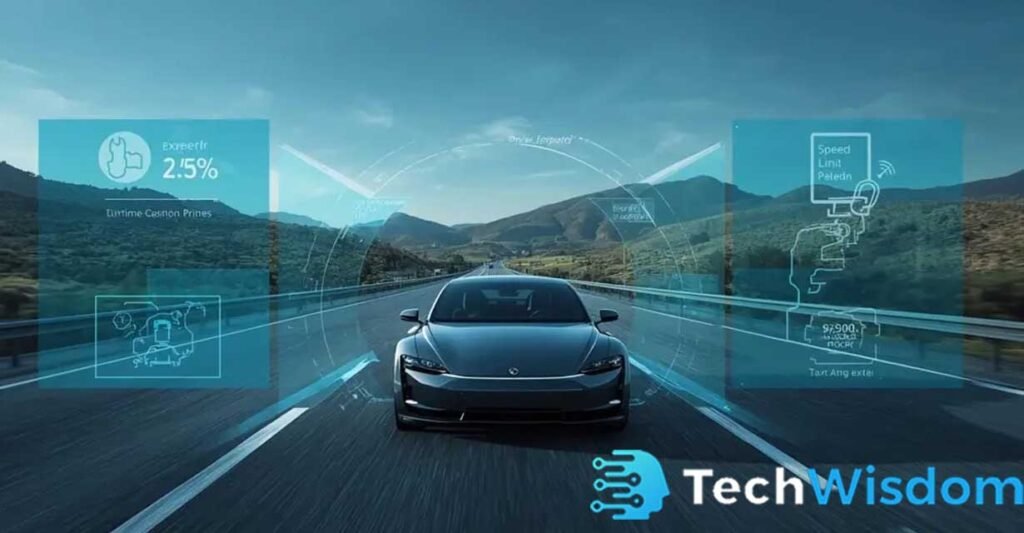
Driving is a fast-moving activity where conditions can change in a fraction of a second. A pedestrian stepping into a crosswalk, a vehicle suddenly Edge Computing in Autonomous braking, or unexpected debris on the road requires an immediate response.
When processing happens locally, the vehicle can analyze information and react without waiting for instructions from a remote server. This reduction in latency helps improve response times and supports safer driving behavior. Even a small improvement in reaction speed can make a significant difference in avoiding accidents.
How Vehicles Turn Sensor Data Into Driving Decisions
Modern autonomous vehicles are equipped with a variety of technologies designed to understand their surroundings. Cameras capture visual Edge Computing in Autonomous information,radar tracks moving objects, and LiDAR creates highly detailed 3D maps of the environment.
Edge computing combines data from all these sources and allows AI systems to interpret it in real time. The vehicle can identify lane markings, traffic signals, road signs, and obstacles while continuously calculating the safest path forward. This process happens thousands of times during a single journey.
Improving Safety Through Faster Reactions
One of the greatest advantages of local data processing is the ability to respond quickly to dangerous situations. When a potential hazard is detected, the vehicle can immediately adjust steering, braking, or acceleration.
For example, if a cyclist unexpectedly enters the vehicle’s path, onboard systems can evaluate the risk and take corrective action within milliseconds. Because decisions are made Edge Computing in Autonomous close to the source of the data, the chance of delays is greatly reduced. This capability is a key reason autonomous vehicle developers invest heavily in edge computing technologies.
Better Accuracy in Navigation and Lane Control
Safety is not only about avoiding accidents. It is also about maintaining consistent and accurate vehicle behavior throughout a journey.
Autonomous systems must remain centered within lanes, follow road markings, and navigate complex intersections. Real-time processing allows vehicles Edge Computing in Autonomous to constantly update their understanding of the road environment. This improves steering precision and helps the vehicle adapt to changing traffic conditions without unnecessary corrections or sudden movements.
Accurate navigation also depends on combining GPS information with live sensor data. By analyzing both sources together, the vehicle can make more reliable routing decisions and maintain a clearer understanding of its exact position.
Supporting Vehicle-to-Everything Communication
The future of transportation involves more than individual vehicles. Cars are increasingly expected to communicate with surrounding infrastructure and other road users through Edge Computing in Autonomous Vehicle-to-Everything (V2X) technology.
This communication can include information about traffic lights, road construction, accidents, and traffic congestion. Processing this information locally allows vehicles to react immediately when new data becomes available.
For example, a connected traffic signal could inform a vehicle that a light is about to change. The vehicle can then adjust its speed smoothly instead of making sudden stops. These interactions help improve both safety and driving efficiency.
Reliable Performance Even Without Strong Connectivity
Internet access is not available everywhere. Rural highways, tunnels, underground parking areas, and remote regions can all experience weak or unstable network connections.
One of the major strengths of edge computing is its Edge Computing in Autonomous ability to operate independently when connectivity is limited. Critical driving functions remain available because the vehicle does not rely entirely on cloud services. This ensures that essential safety systems continue working even when communication networks are unavailable.
For autonomous vehicles, this level of reliability is extremely important. A temporary loss of internet access should never prevent the vehicle from making safe decisions.
Challenges That Still Need to Be Solved
Despite its advantages, edge computing brings several technical challenges. Autonomous vehicles require powerful processors capable of handling enormous amounts of data in real time. These components increase manufacturing costs and can consume significant amounts of energy.
Cybersecurity is another important concern. As vehicles become Edge Computing in Autonomous more connected, protecting systems from unauthorized access becomes increasingly critical. Manufacturers must develop strong security measures to safeguard both vehicle operations and user data.
Software complexity also continues to grow. Engineers must ensure that AI models, sensors, and computing systems work together smoothly while maintaining high levels of accuracy and reliability.
The Impact of 5G and Edge AI on Future Mobility
Emerging technologies are making edge computing even more effective. 5G networks provide faster communication speeds and lower latency, allowing vehicles to exchange information more efficiently with nearby systems.
At the same time, advances in Edge AI enable sophisticated Edge Computing in Autonomous machine learning models to run directly on vehicle hardware. This reduces dependence on external computing resources and allows vehicles to perform more advanced tasks independently.
Combined with smart city infrastructure, these technologies are creating a transportation ecosystem where vehicles, roads, and traffic systems can work together in real time.
Why Edge Computing Will Shape the Future of Autonomous Driving
As autonomous transportation continues to develop, the demand for faster, safer, and more accurate decision-making will only increase. Vehicles must process huge amounts of information while responding instantly to changing conditions.
Edge computing provides the foundation needed to meet these requirements. By bringing processing power closer to the source of data, it enables rapid responses, improves reliability, and supports advanced AI-driven capabilities.
The result is a transportation system that is not only smarter but also safer. As technology continues to evolve, edge computing is expected to remain one of Edge Computing in Autonomous the key building blocks behind the next generation of autonomous vehicles.
FAQs
What is edge computing in autonomous vehicles?
It is a computing approach that processes data inside the vehicle or near its source instead of relying entirely on distant cloud servers.
Why is edge computing important for self-driving cars?
It reduces delays in decision-making, allowing vehicles to react faster to road conditions and potential hazards.
How does edge computing improve driving accuracy?
It helps vehicles process sensor data in real time, Edge Computing in Autonomous improving lane positioning, navigation, and object recognition.
Can autonomous vehicles work without internet access?
Yes. Many critical functions can continue operating because important data is processed locally.
What technologies work with edge computing in autonomous vehicles?
Key technologies include AI, LiDAR, radar, cameras, 5G networks, and V2X communication systems.