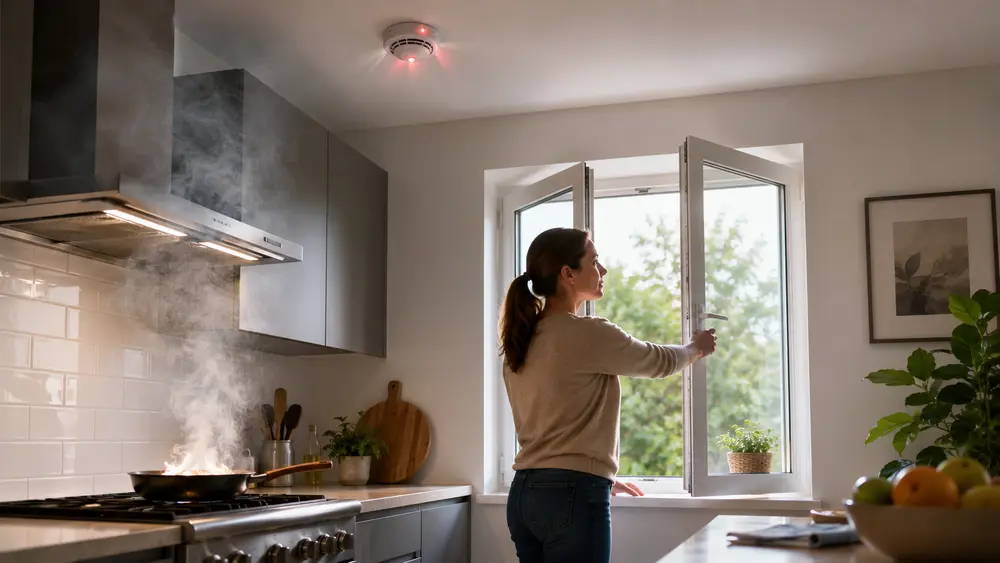
Enjoying the cooking in your home until a loud alarm starts sounding due to smoke from the kitchen. This is a common issue for many when they are frying foods, smoking bread, or cooking at high temperatures. Fortunately, there are a few cooking-related alarms that are actually emergencies. Knowing how to turn off Fire Alarm systems is a great way to end the alarm before it does any damage to your home. This guide covers the causes, solutions, prevention tips and safety steps.
Why Cooking Smoke Triggers Fire Alarms
Fire alarms can detect very fine smoke particles in the air. They are primarily tasked with alerting people to potential fire situations. But on occasion, smoke from normal cooking may resemble smoke from a hazardous fire.
When food catches fire, it emits particles which travel through the air. These particles may go into the smoke detector and trigger the alarm. Sensitive detectors can be set off by a little smoke.
Alarms are triggered by common cooking scenarios, such as:
- Burning food
- Overheated cooking oil
- Avoid cooking meat at a high temperature.
- Cooking on an indoor grill.
- Burnt toast
- Poor kitchen ventilation
The steam from the boiling water that is going astray.The superfluous steam from boiling water.
This is the first step in learning how to safely handle Turn Off Fire Alarm situations by understanding these causes.
Check for Real Danger First
Always check for a real fire before silencing an alarm. This will be the most critical safety measure.
Take a walk around your kitchen and some rooms. Look for any flames, smoke or a very strong burning odor. If a fire is spreading or it appears to be out of control, evacuate the building and dial 911.
If the smoke is obviously from cooking, and the risk is not present, you can start the process of How to Turn Off Fire Alarm systems safely.
Remove the Source of Smoke
The quickest way to extinguish an alarm is to eliminate the source of the smoke.
Switch off the stove, oven or other cooking apparatus. Remove burned food from heat source. If the food is badly burnt, carefully move it outside if it is safe.
The smoke source is removed from the detector, reducing the amount of smoke entering it. This would make the How to Turn Off Fire Alarm problem easy to solve.
Open Windows and Doors
Smoke can be removed from the room by fresh air.
Open any doors and windows in the room that are closed. This way, smoke can easily escape the home. The alarm may be prevented from sounding by good air circulation, which can often stop it in just a few minutes.
Cross ventilation is best. Open windows, if possible, across room. This makes it easy for smoke to get out effectively.
Use Fans to Clear the Air
Smoke can be removed more quickly by fans.
Use a range hood or a kitchen exhaust fan. Other ceiling fans and portable fans can assist. Use portable fans to direct smoke into open windows, not directly towards a smoke detector.
Use the Silence or Hush Button
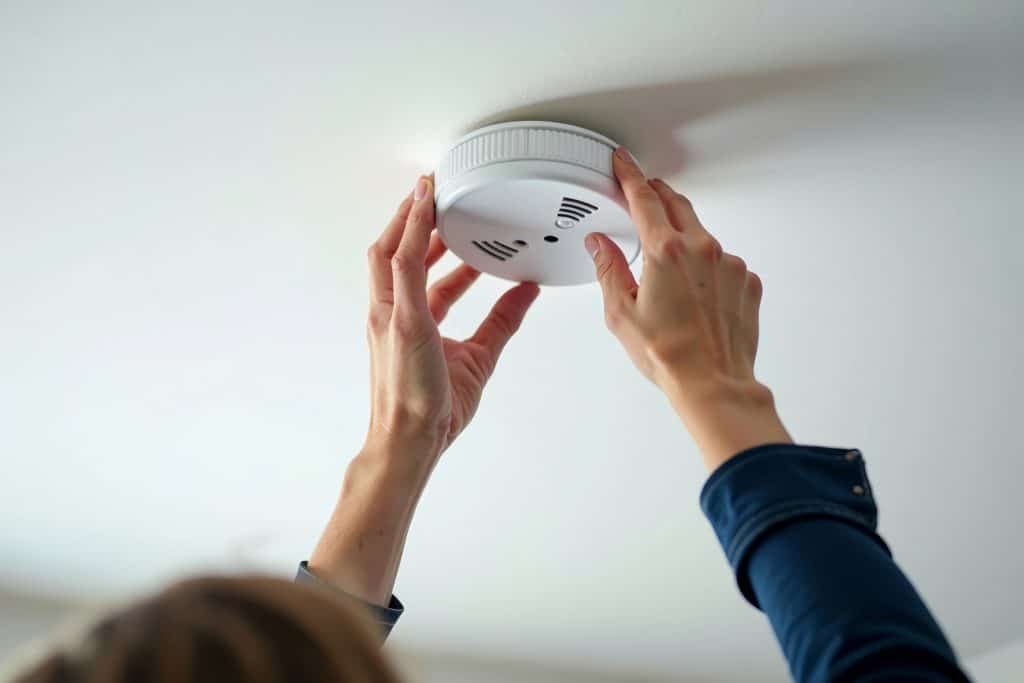
Most smoke alarms today have a Silence, Hush or Test/Silence button.
Hold down the button for some time. The alarm should be temporarily muted. Depending on the model, it will either remain silent for 5 to 15 minutes until the air is clear or be noisy but audible.
This function is particularly designed to accommodate nuisance alarms from cooking, steam or other non-hazardous conditions.
What If the Alarm Keeps Ringing?
The alarm may sound for some time after the smoke has cleared.
This can occur because smoke particles can stay in the detector chamber. This may also occur because of dust, grease or low battery.
If the alarm persists after ventilation, carefully review the detector. It is essential to be aware of these options when facing problems with fire alarms that don’t shut off instantly.
Check the Battery
When the alarm exhibits unusual behavior, it may be due to a weak battery.
Low battery smoke alarm chirps are common with many smoke detectors. Occasionally these sounds are mistaken for smoke alarms.
Install a battery of a comparable brand; if different, follow the manufacturer’s specifications. Test the detector after replacement to see if it is functioning properly.
Reset the Alarm
If cleaning and ventilation don’t resolve the issue, a reset might be necessary.
If it’s battery-operated, disconnect the battery and press the test button for approximately 20 seconds. Reinstall the battery and test the detector.
For hardwired systems, unplug from the breaker, remove backup batteries, press the test button and then plug back in.
This is a technique many homeowners use to determine how to Turn Off Fire Alarm systems that seem to be constantly going off false alarms.
Different Types of Smoke Detectors
Some smoke alarms will not be affected by cooking smoke.
Ionization Smoke Alarms
These alarms are extremely sensitive to the smallest of smoke particles. They tend to respond readily to smoke and burnt foods.
They are sensitive and are more prone to false alarms in kitchens.
Photoelectric Smoke Alarms
These alarms are more sensitive to bigger smoke particles.
They are often recommended near kitchens, as they tend to be less reactive during normal cooking activities and are generally less susceptible to heat or fire.
Dual-Sensor Alarms
This device incorporates both technologies.
These are good protectors but can be activated if a lot of smoke enters the detector.
Best Placement for Smoke Alarms
The location is more significant than is often thought.
Never put a smoke alarm above a stove or oven. When possible, they should be located at least 10 feet from cooking appliances.
Adequate arrangements minimise nuisance alarms and still ensure good fire protection.
One of the best ways to prevent cooking problems in the long run is to set the alarm early enough.
How to Prevent Cooking Smoke Alarms
It’s better to prevent than to have recurring alarms.
These are some easy tips:
When preparing food, use the range hood.
- Open a nearby window.
- Avoid overheating oil.
- Watch food closely.
- Wipe down grease off cooking surfaces.
- Use lids/splatter screens.
- Follow proper kitchen ventilation.
These habits help to greatly decrease false alarms.
Common Mistakes to Avoid
There are some common missteps when attempting to disable an alarm.
Do not permanently remove batteries. Never cover the detector with material such as cloth, tape or plastic. Don’t disconnect the alarm for extended periods.
Smoke detectors keep lives safe. If disabled, they can pose significant safety risks.
Rather, observe correct troubleshooting procedures when it is necessary to learn How to Turn Off Fire Alarm alerts safely.
When Should You Replace Your Smoke Detector?
The majority of smoke alarms need to be replaced every 10 years.
Look for the manufacture date on the unit. In most cases, the detector should be replaced if it has been more than 10 years old.
Other indicators are:
- Frequent false alarms
- Failed testing
- Yellowed plastic
- Damaged housing
- Ongoing malfunctions
When a detector keeps sounding the alarm, it’s usually a problem that can be solved by replacing the detector.
Why Regular Maintenance Matters
For smoke detectors to function correctly they require regular maintenance.
A monthly test confirms that the alarm can alert when danger occurs. Battery replacement protects power. Avoiding dust buildup through cleaning.
Periodic maintenance minimizes false alarms and enables detector to respond in actual emergencies.
Safety Tips for Families
A fire safety plan is a must have for all families.
Explain to children what noises the alarms make and what they need to do when they hear them. Make fire escape plans for each room. Conduct fire and emergency drills regularly.
If an alarm is triggered by cooking smoke, it is important to take every alarm seriously until you have determined the cause.
Knowing how to DISCONNECT Fire ALARM systems must naturally be accompanied by knowledge of fire safety.
Conclusion
One of the most common causes of a smoke alarm sounding is cooking smoke. The loud sound can be annoying but the alarm is doing its job, alerting you to danger. The best way to be safe is to extinguish the smoke, increase airflow, use silence mode, and check the detector if necessary.
Knowing how to turn off fire alarm alerts properly can help you deal with false alarms promptly without compromising the safety of your home. By cleaning regularly, providing proper placement and routine maintenance, you can avoid future problems and keep your family safe.
Frequently Asked Questions
My fire alarm sounds when I cook why?
Smoking, steam, and grease particles may enter the detector and activate the alarm. The cooking smoke remains in the air for some time.
How long does cooking smoke stay in the air?
Smoke may dissipate in a few minutes or persist for 30 minutes or more.
Can I remove the battery to stop the alarm?
For troubleshooting purposes only. Reinstall the battery right after.
What button turns off a smoke alarm?
Most alarms will either have a Silence, Hush, or Test/Silence button to temporarily silence the alarm.
When should my smoke detector be replaced?
Smoke detectors should be replaced at least every ten years, according to most manufacturers.