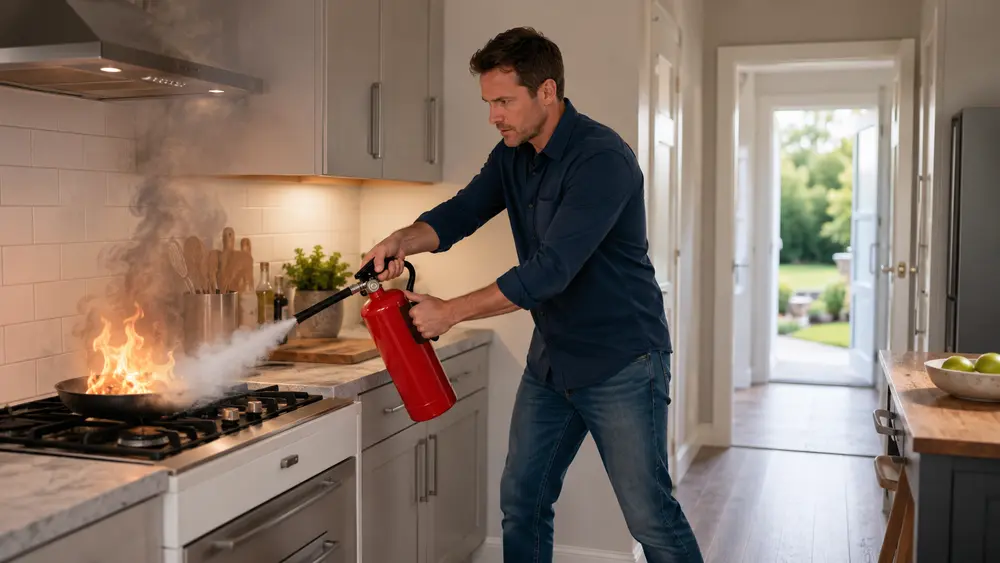
A fire can start in a few seconds, and it can grow fast if no one acts safely. This is why every home, office, shop, and kitchen should have a fire plan. Knowing how to use a Fire Extinguisher is an important safety skill because it can help stop a small fire before it becomes a serious danger. But your life always comes first. If the fire is large, smoky, or spreading, leave the place and call emergency services.
Why Learning How to Use a Fire Extinguisher Matters
Knowing how to use a Fire Extinguisher can protect people and property during a small emergency. Many fires begin with a small flame, such as a pan fire, paper fire, or electrical spark. If the correct extinguisher is nearby, a trained person may stop the fire early.
This skill also helps reduce panic. In a fire, people may feel afraid and confused. They may not know where to stand or where to aim. When you learn the right steps before an emergency, you can think more clearly and act more safely.
What a Fire Extinguisher Does
A fire extinguisher is a portable safety device. It has a cylinder filled with an agent that can stop a fire. This agent may be dry powder, foam, carbon dioxide, water, or wet chemical. When you press the handle, the agent comes out through a nozzle or hose.
A fire extinguisher is designed for small fires, not large ones. It is not a replacement for the fire department. It is only a first safety tool. If the fire becomes too strong, too hot, or too smoky, you must leave quickly.
Before You Try to Fight a Fire
Before using any extinguisher, stop and assess the situation. Ask yourself: Is the fire small? Is it in one place? Is there a clear way out? Is the room not full of smoke? Do I know what is burning? Do I have the right extinguisher?
Learning how to use a Fire Extinguisher also means knowing when not to use it. If your answer to any safety question is no, leave the area. Close the door if you can do it safely. Then call emergency services from outside.
First, Warn People and Call for Help
The first action in a fire is to warn others. Shout “Fire!” so people know there is danger. If the building has a fire alarm, pull it or press it. This helps people leave before smoke spreads.
Ask someone to call emergency services. If you are alone and the fire is growing, leave first. Call for help when you are outside. Never stay inside just to make a phone call if the fire is nearby.
Keep a Safe Exit Behind You
A very important rule is this: keep your back toward a clear exit. The fire must not be between you and the door. If the fire spreads, you need to retreat and escape.
Do not walk deep into a room to fight a fire. Do not let smoke block your way out. If heat, smoke, or flames move toward your exit, stop using the extinguisher and leave at once.
How to Use a Fire Extinguisher with the PASS Method
The best way to remember How to use a Fire Extinguisher is the PASS method. PASS means Pull, Aim, Squeeze, and Sweep. These four steps are simple, but they must be done in the correct order.
Stand at a safe distance before you start. Read the label on your extinguisher before any emergency happens. Some extinguishers spray for only a short time, so you must be ready and careful.
Step 1: Pull the Pin
The first step is to pull the pin. The pin stops the extinguisher from spraying by mistake. Hold the extinguisher upright. Point the nozzle away from your face and body. Then pull the pin out.
This is the first step in How to Use a Fire Extinguisher because the extinguisher cannot work while the pin is locked. After the pin is removed, be ready. The extinguisher can spray when you press the handle.
Step 2: Aim at the Base
The second step is to aim low. Many people make the mistake of aiming at the top of the flames. This does not work well because the fuel is usually at the bottom.
A key part of usinga Fire Extinguisher is aiming at the base of the fire. The base is where the fire is burning from. When you attack the base, you attack the fuel and help stop the fire source.
Step 3: Squeeze the Handle
The third step is to squeeze the handle. Press it slowly and firmly. This releases the extinguishing agent. Hold the extinguisher with both hands if needed, because it may feel heavy or strong.
When learning howto use a Fire Extinguisher, remember that most small units do not spray for long. Some may last only a few seconds. Do not waste the agent by spraying too high or too far from the fire.
Step 4: Sweep Side to Side
The fourth step is to sweep from side to side. Keep the nozzle pointed at the base of the fire. Move slowly across the burning area until the fire looks out.
This final part of How to Use a Fire Extinguisher is important because a single burning spot can reignite the fire. Keep sweeping until the flames are gone. Then back away slowly while keeping an eye on the area.
Know the Fire Classes
Fire extinguishers have letters and symbols on the label. These signs show what type of fire the extinguisher can fight. Using the wrong extinguisher can be dangerous.
Class A is for wood, paper, cloth, trash, and some plastics. Class B is for flammable liquids like gasoline, oil, and paint. Class C is for electrical equipment. Class D is for burning metals. Class K is for cooking oils and fats.
Choose the Right Fire Extinguisher
Using a Fire Extinguisher safely also means choosing the correct type. A home or office often has an ABC extinguisher. This type can help with common solid materials, flammable liquids, and electrical equipment.
For an electrical fire, use a Class C or ABC extinguisher. Do not use water on live electrical equipment. Water can conduct electricity and may cause shock. If possible and safe, turn off the power first.
Kitchen Fire Safety
Kitchen fires are common because of hot oil, grease, paper towels, and cooking mistakes. If a pan catches fire, turn off the heat only if you can do it safely. You may cover the pan with a metal lid to cut off oxygen.
Never pour water on a grease fire. Water can make burning oil splash and spread. For large cooking oil fires, a Class K extinguisher is often used, especially in commercial kitchens.
Electrical Fire Safety
Electrical fires can start from wires, outlets, machines, chargers, or appliances. If you smell burning plastic or see sparks, stay careful. Do not touch damaged wires or wet electrical items.
For electrical fires, the right extinguisher is very important. A Class C extinguisher is made for energized electrical equipment. An ABC extinguisher is also common in many homes and offices.
Common Mistakes to Avoid
One mistake is thinking that knowing howto use a Fire Extinguisher means fighting every fire. This is not true. You should only fight a fire when it is small, you have the right extinguisher, and you have a clear exit.
Other mistakes include standing too close, aiming at flames, using the wrong type, or turning your back on the fire. Another big mistake is staying after the extinguisher is empty. If it does not work, leave fast.
What to Do After the Fire Is Out
After the fire looks out, do not relax too quickly. A fire can start again if the material is still hot. Back away slowly. Keep watching the area. Do not touch burned objects because they may still be hot.
A complete guide to How to Use a Fire Extinguisher includes aftercare. Report the fire. Let trained people check the area if needed. Recharge or replace the extinguisher after any use, even if you used only a little.
How to Check Your Fire Extinguisher
Check your extinguisher often. Make sure it is easy to reach and not hidden behind furniture or boxes. Look at the pressure gauge. The needle should be in the safe zone.
Also check the pin, seal, hose, and nozzle. Look for rust, dents, leaks, or damage. If anything looks wrong, get it serviced or replaced. A broken extinguisher may fail when you need it most.
Where to Keep a Fire Extinguisher
Place extinguishers where fires may start, but not too close to danger. Good places include the kitchen exit, the garage, the workshop, the hallway, the office, and near doors.
Practicing howto use a Fire Extinguisher is easier when everyone knows where the extinguisher is. Do not hide it. Do not place it where children can play with it. It should be visible and easy to reach.
Fire Safety at Home
Every home should have a simple fire plan. Family members should know two ways out of each room if possible. They should know where to meet outside.
Smoke alarms are also important. Test them often. A fire extinguisher is helpful, but smoke alarms and escape plans save lives. Do not rely on a single safety tool.
Fire Safety at Work
Workplaces should train people before asking them to use extinguishers. Workers should know where the exits are, where the alarms are, and where the extinguishers are.
Some workplaces tell workers to leave rather than fight the fire. This is okay. Every building has different risks. Follow your workplace’s safety rules and listen to trained fire wardens.
When to Leave Immediately
Leave immediately if the fire grows, smoke becomes thick, the room gets hot, or your exit is no longer clear. Leave if the extinguisher is empty or not working. Leave if you feel unsafe.
Do not try to save objects. Do not go back inside for phones, bags, pets, or papers. Tell firefighters if someone or something is still inside. Let trained people handle the danger.
Simple Emergency Checklist
Warn people. Pull the alarm if there is one. Call emergency services. Keep an exit behind you. Choose the correct extinguisher. Use PASS: Pull, Aim, Squeeze, Sweep.
Back away after the fire is out. Watch for reignition. Replace or recharge the extinguisher. Report the fire. Learn from the event and improve your fire plan.
Final Thoughts
Now you understand how to use a fire extinguisher more safely and clearly. The main rule is simple: only fight a small fire when you have a safe exit and the right extinguisher.
Remember PASS: Pull the pin, Aim at the base, Squeeze the handle, and Sweep side to side. If the fire spreads or you feel unsafe, leave at once and call emergency services.
Frequently Asked Questions
What is the PASS method?
PASS means Pull, Aim, Squeeze, and Sweep. It is the simplest method for operating a fire extinguisher.
Can I use water on an electrical fire?
No. Do not use water on live electrical equipment. Use a Class C or ABC extinguisher.
When should I not fight a fire?
Do not fight a fire if it is large, spreading, smoky, too hot, or blocking your exit.
What type is best for most homes?
An ABC extinguisher is common in homes because it can fight many common types of fire.
What should I do after using an extinguisher?
Back away, watch the area, report the fire, and recharge or replace the extinguisher.