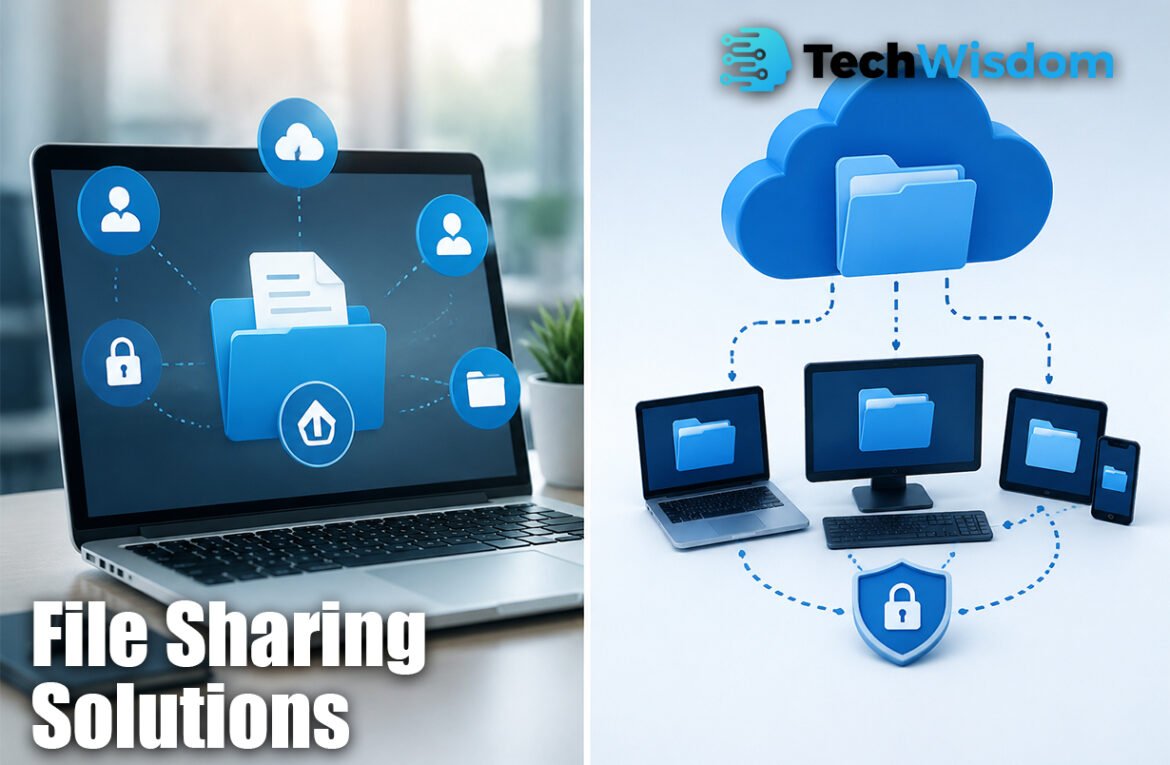
Choosing the right File Sharing Solutions helps businesses manage documents, improve teamwork, and protect important information in a digital environment. Companies now handle large amounts of data daily, from contracts and reports to customer files and project documents. A reliable sharing system allows teams to access files quickly, collaborate smoothly, and maintain better control over business information without depending on traditional methods like email attachments or physical storage devices.
What Are File Sharing Solutions and Why Do Businesses Need Them?

File sharing systems are digital tools that allow users to upload, store, organize, and share files through computers, mobile devices, or online platforms. These tools create a central place where employees can manage documents and communicate more efficiently.
Modern File Sharing Solutions support businesses by reducing manual work and improving access to important files. Instead of through emails or different storage locations, employees can find updated documents from one secure platform.
Businesses need these solutions because remote work, global teams, and digital operations have increased the demand for fast and secure information exchange. Companies can improve workflow, reduce delays, and create a more organized working environment.
How File Sharing Solutions Improve Collaboration and Productivity
Effective file sharing makes teamwork easier by allowing multiple users to access and manage documents together. Employees can review files, provide feedback, and complete projects without sending repeated versions through email.
For example, a marketing team can work on campaign materials, while a finance team can update reports, all within the same digital workspace. Features such as real-time editing, comments, and notifications help teams stay connected.
Another important benefit is time savings. Employees spend less time on documents and more time focusing on valuable tasks. This improves productivity and helps businesses complete projects faster.
Which Types of File Sharing Solutions Fit Different Business Needs?
Businesses can choose from different file-sharing options depending on their size, industry, and security requirements. Cloud-based platforms are popular because they provide flexible storage, remote access, and easy management without requiring expensive hardware.
Enterprise solutions are designed for larger organizations that need advanced controls. They often include features such as user permissions, compliance tools, activity tracking, and integration with existing business software.
Managed file transfer systems are useful for companies that exchange large or sensitive files regularly. Industries such as healthcare, finance, and legal services often require stronger protection because they handle confidential information.
What Features Should You Look for in a Secure File Sharing Solution?
Security is one of the most important factors when selecting a file-sharing platform. Businesses should look for features that prevent unauthorized access and protect valuable information.
Important features include:
- Data encryption to protect files during storage and transfer
- Multi-factor authentication for stronger account protection
- Permission controls to manage user access
- Backup options to prevent data loss
- Version history to recover previous file versions
A good platform should also provide simple management tools. Administrators need the ability to control users, monitor activity, and adjust permissions as business needs change.
How to Evaluate Security, Privacy, and Compliance Requirements
Different businesses have different security responsibilities. Before choosing a platform, companies should understand what type of information they store and what regulations they must follow.
Organizations handling customer records, financial information, or personal data should select solutions that support industry standards. Compliance with frameworks such as GDPR and HIPAA can be important for companies operating in regulated sectors.
Privacy policies should also be reviewed carefully. Businesses should understand where their data is stored, how it is protected, and who can access it.
How to Choose the Right File Sharing Solutions for Your Business Size
Small businesses often need simple platforms that are affordable and easy to manage. They usually benefit from solutions that provide basic storage, sharing options, and collaboration features without complicated setup.
Medium-sized businesses may require more advanced tools, including better administration, larger storage capacity, and software integrations. As teams grow, their file management needs become more complex.
Large enterprises need powerful systems that support thousands of users, advanced security controls, and detailed reporting. The right choice depends on business goals, workflow requirements, and future growth plans.
What Factors Should You Compare Before Selecting a File Sharing Platform?
Before making a decision, businesses should compare several important factors. Cost is important, but it should not be the only consideration. A cheaper option may lack essential security or collaboration features.
Companies should evaluate:
- Storage limits and scalability
- User management options
- Security features
- Integration capabilities
- Customer support quality
- Ease of use
A platform should fit naturally into existing workflows. Employees are more likely to use a system that is simple, reliable, and convenient.
How File Sharing Solutions Support Remote Work and Future Business Growth
Remote and hybrid work models have changed how businesses operate. Teams need secure access to documents regardless of location, device, or time zone.
Modern File Sharing Solutions allow employees to work efficiently from offices, homes, or different countries. They provide a connected environment where teams can share knowledge and complete tasks without physical limitations.
Future developments will focus on smarter automation, artificial intelligence, and stronger security methods. AI-powered automatic file organization and advanced threat detection will continue improving how companies manage digital information.
FAQs About Business File Sharing
What is the main purpose of a file-sharing platform?
A file-sharing platform helps users store, organize, and share digital files securely. It improves communication, collaboration, and access to important business information.
Are cloud file-sharing tools safe for businesses?
Yes, many cloud platforms use strong security methods such as encryption, authentication controls, and backup systems. Businesses should review security features before selecting a provider.
Can file-sharing tools support remote employees?
Yes, these tools are designed for modern workplaces. Employees can access documents from different locations while maintaining secure connections.
How do businesses prevent unauthorized file access?
Businesses can use strong passwords, multi-factor authentication, permission settings, and regular security reviews to control who can view or edit files.
What should a company consider before choosing a file-sharing service?
A company should consider security, pricing, storage needs, scalability, integrations, and ease of use before selecting a service.