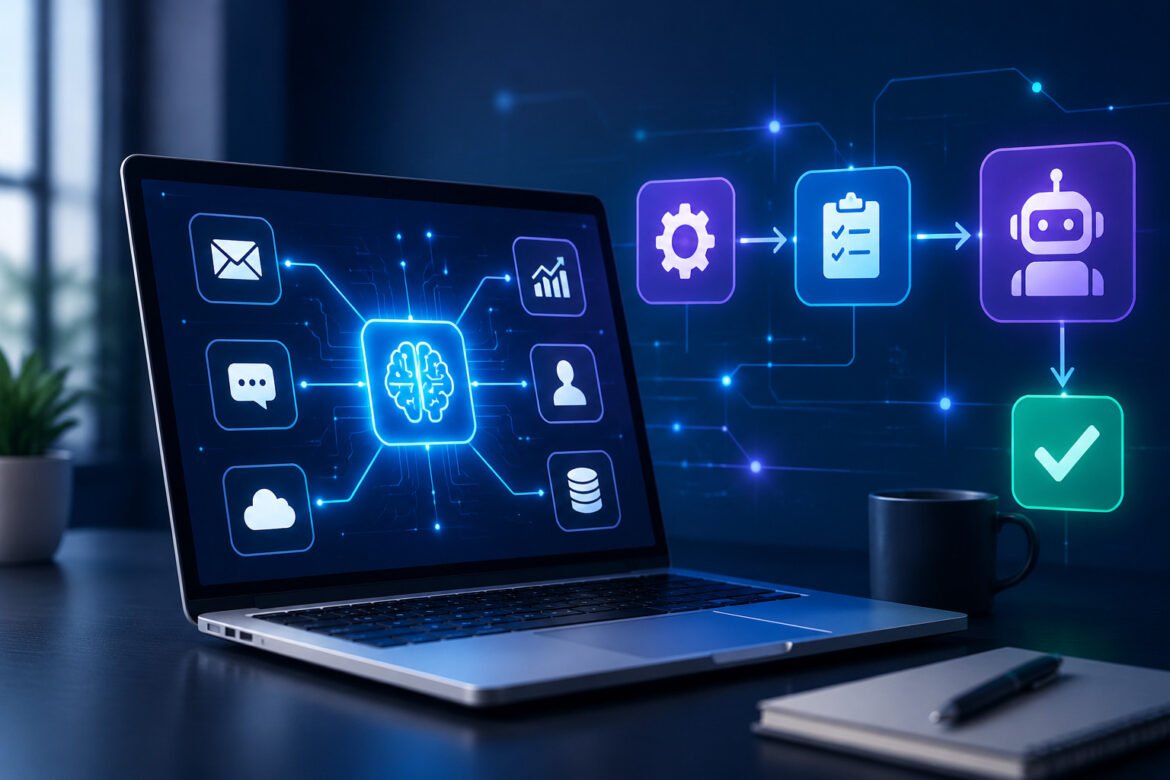
droven io ai automation tools are modern AI-systems that help businesses automate daily work in a smarter and faster way. Instead of doing repetitive manual tasks, companies use AI automation to handle email, data, marketing, and customer support. This improves speed, reduces effort, and makes business operations more efficient in today’s digital world.
Understanding droven io ai automation tools in simple terms
droven io ai automation tools refer to AI-driven automation systems explained in digital tech platforms like Droven-style content. These tools are not a single software but a combination of AI systems that work together to automate business tasks.
They use Artificial Intelligence, workflow rules, and software connections to complete tasks without human involvement. For example, when a customer submits a form, the system can automatically send a response email and store the data in a CRM system without manual input.
How droven io ai automation tools actually work behind the scenes
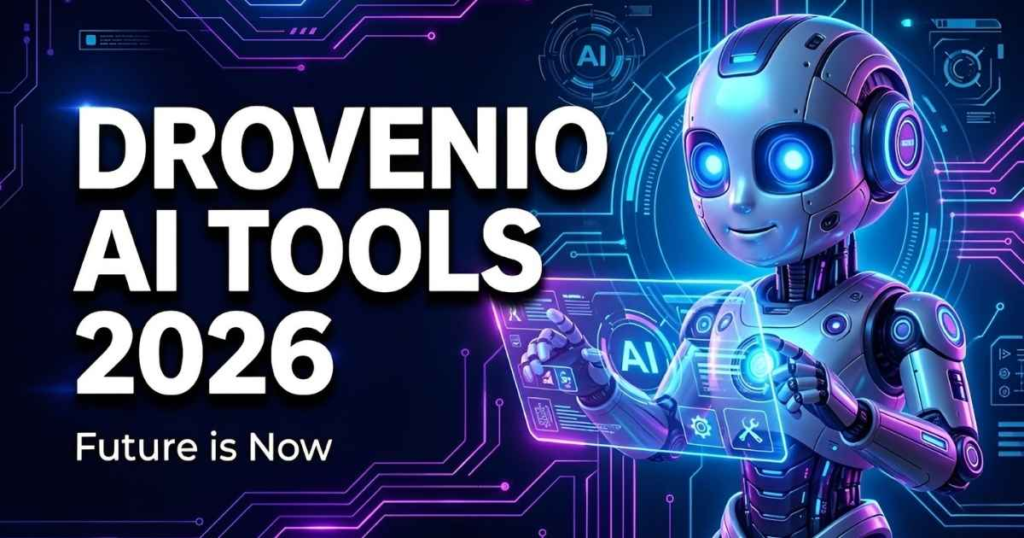
The working process of droven io ai automation tools is based on automation logic that connects actions together. This is often described as “trigger and action” workflow.
When one event happens, another action is automatically triggered. For example, if a new lead enters a website, the system can instantly notify the sales team, send a welcome message, and update the database.
These tools rely on AI models, APIs, and automation platforms such as Zapier AI or Make. These platforms act as bridges between different applications, allowing them to work together smoothly without manual effort.
Why businesses are adopting droven io ai automation tools
Many companies are now using droven io ai automation tools because they solve one major problem: time consumption. Businesses spend too much time on repetitive tasks, and automation helps reduce this workload significantly.
Instead of manually handling emails, reports, or customer messages, AI systems manage everything in the background. This allows employees to focus on creative and strategic work instead of routine tasks.
Another reason businesses prefer these tools is accuracy. Since AI follows fixed workflows, it reduces human errors and improves consistency in business operations.
Real-world applications of droven io ai automation tools
In real business environments, droven io ai automation tools are widely used in multiple areas. In marketing, they help automate email campaigns, schedule social media posts, and analyze customer behavior to improve results.
In sales departments, these tools manage lead tracking, customer follow-ups, and CRM updates without manual work. This ensures that no lead is missed and communication stays fast and organized.
Customer support teams also use AI automation to power chat systems that respond instantly to user questions. This improves customer satisfaction and reduces response time.
Key advantages of droven io ai automation tools for modern businesses
One of the biggest advantages of droven io ai automation tools is improved productivity. Businesses can complete more tasks in less time without increasing workload.
These tools also help reduce operational costs because fewer manual resources are needed for repetitive tasks. At the same time, they improve workflow speed by connecting multiple systems together.
Another major advantage is scalability. As a business grows, automation systems can handle increasing tasks without slowing down operations or requiring major changes.
Common tools used with droven io ai automation tools systems
There are several well-known platforms that work in the same ecosystem as droven io ai automation tools. These include automation systems that connect apps and create smart workflows.Platforms such as UiPath are used for robotic process automation, while tools like GoHighLevel focus on marketing and CRM automation. Together, these systems help build complete AI-powered workflows for businesses.
Tools like Zapier AI, Make, and n8n are commonly used for workflow automation. They allow users to connect different applications without coding knowledge.
Challenges and limitations of droven io ai automation tools
Even though droven io ai automation tools are powerful, they still have some limitations. One common challenge is setup complexity, especially for beginners who are new to automation systems.
Another issue is integration, where some apps may not connect easily with others. This can require extra configuration or technical understanding.
Cost can also be a challenge for small businesses, especially when using advanced AI features or multiple automation platforms at the same time.
Read More: droven io future of ai: How Artificial Intelligence Is Shaping Tomorrow’s Technology
Future of droven io ai automation tools in digital business
The future of droven io ai automation tools is expected to grow rapidly as AI technology becomes more advanced. Businesses will rely more on automation to handle everyday operations with minimal human input.
In the coming years, AI systems will become smarter, more predictive, and easier to use. This means businesses will be able to automate entire workflows, from marketing to customer service, using simple setup processes.
This evolution will transform how companies operate and make digital workflows more efficient than ever before.
FAQs
What are droven io ai automation tools used for?
They are used to automate business tasks like marketing, sales, customer support, and data management.
Are droven io ai automation tools a single software?
No, they are a group of AI automation systems and tools used together in workflows.
Do I need coding skills to use these tools?
No, most tools are no-code or low-code and can be used without programming knowledge.
What is the biggest benefit of these tools?
They save time, reduce manual work, and improve business efficiency.
Where are these tools most commonly used?
They are mostly used in marketing, sales, customer service, and business operations.