
The Capgemini Acquisition WNS deal is a major change in the global technology and business-services market. Capgemini completed the purchase of WNS on October 17, 2025, after announcing the agreement on July 7, 2025. The deal brings together Capgemini’s consulting, cloud, data, and AI skills with WNS’s deep knowledge of business processes. Their shared goal is to build stronger Intelligent Operations, where employees, automation, and AI agents improve complete business workflows.
What Happened in the Capgemini and WNS Deal?
Capgemini agreed to pay $76.50 in cash for each WNS share. The total cash value was about $3.3 billion, excluding WNS’s net financial debt. The offer included a premium over WNS’s earlier market price, which made the deal more attractive to shareholders. Both companies’ boards approved the agreement, and WNS shareholders later voted in favour of it.
The transaction used a court-approved scheme of arrangement under Jersey law. It also needed regulatory clearances and approval from the Royal Court of Jersey. After all conditions were met, WNS became a wholly owned Capgemini company. Its financial results were added to Capgemini’s accounts from the closing date.
Why Did Capgemini Buy WNS?
The main reason behind the Capgemini Acquisition WNS strategy was the growing demand for smarter business operations. Many companies already use cloud tools and simple automation. However, they now want AI to improve full processes, such as finance, insurance claims, customer support, purchasing, and supply-chain work.
Capgemini already had global consulting, technology, cybersecurity, data, and generative AI services. WNS added detailed industry knowledge, process platforms, analytics skills, and long-term operating contracts. Together, the companies can advise a client, redesign its process, build the technology, and then manage the process every day.
How WNS Strengthens Intelligent Operations
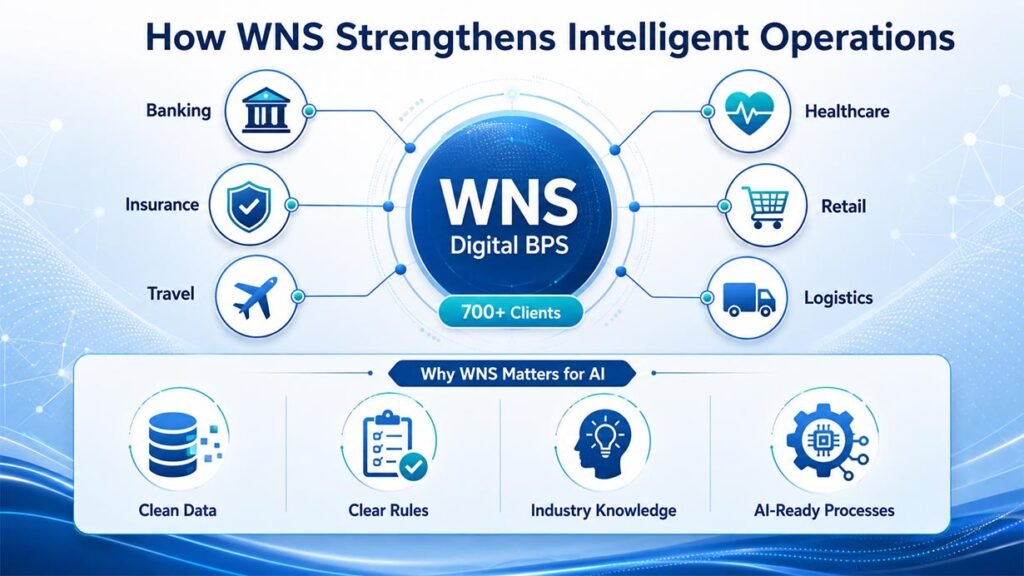
WNS was a strong player in Digital Business Process Services, also known as Digital BPS. It helped more than 700 clients improve important operations in banking, insurance, travel, healthcare, retail, logistics, and other industries. Its teams understood the rules, risks, documents, and daily tasks inside these sectors.
This experience matters because AI works best when it has clean data, clear rules, and strong industry knowledge. A general AI tool may create text, but it cannot safely manage a complex insurance claim without the correct process design and controls. WNS gives Capgemini a stronger base for developing useful, industry-focused AI services.
What Agentic AI Means for Business Operations
Agentic AI describes systems that can receive a goal, plan steps, use digital tools, and complete tasks with limited human help. For example, an AI agent may read an invoice, compare it with a purchase order, find a difference, contact the correct employee, and prepare the payment for approval.
The Capgemini Acquisition WNS plan aims to use this technology across complete business processes. Still, human control remains important. Companies need people to manage unusual cases, protect private information, review major decisions, and check whether AI follows legal and company rules. The strongest model will likely combine trained employees with secure AI agents.
Which Industries Could See the Biggest Impact?
Banking and insurance may see early benefits because they handle large numbers of documents, repeated checks, and regulated decisions. AI-supported operations can help with claims, fraud reviews, customer questions, payment checks, loan processing, policy work, and financial reporting.
Travel, retail, healthcare, and logistics may also benefit. WNS already had specialist platforms and experience in these markets. Capgemini can connect this knowledge with cloud systems, cybersecurity, data engineering, and AI. This may help clients reduce errors, respond faster, and improve service without rebuilding every system from the beginning.
Expected Financial and Business Benefits
Capgemini said the deal should support its revenue growth and operating margin. When the acquisition was announced, the company expected it to increase normalised earnings per share by 4% before synergies in 2026 and 7% after synergies in 2027. These figures were company estimates and not guaranteed results.
Capgemini also targeted yearly revenue synergies of about €100 million to €140 million and yearly cost synergies of €50 million to €70 million by the end of 2027. Revenue gains may come from selling more services to existing clients and winning larger contracts. Cost savings may come from shared systems, offices, purchasing, and support functions.
What Clients and Employees May Gain
Clients may gain access to one provider for consulting, system design, AI development, process management, and continuous improvement. This can make large transformation projects easier to control. It may also help companies move from small AI tests to secure services that support real daily work.
For employees, the Capgemini Acquisition WNS creates access to larger projects, global clients, and new training opportunities. However, job roles may change as automation handles more routine work. Demand could grow for process designers, AI supervisors, data specialists, cybersecurity experts, and employees who manage complex cases and customer relationships.
Main Risks Capgemini Must Manage
The first risk is integration. Capgemini must combine teams, sales methods, technology platforms, and management systems without reducing service quality. It must also keep key WNS employees and protect important client relationships. If skilled people or major clients leave, the expected value of the deal may fall.
Other risks include higher debt, delayed savings, AI errors, cyberattacks, privacy problems, and changing AI laws. Agentic systems can work across several tools, so weak controls may create larger mistakes. Capgemini will need clear approval rules, strong security, detailed audit records, and regular human review. The company has also warned that planned synergies may arrive later or differ from its estimates.
What the Deal Means for the Future of AI Operations
The Capgemini Acquisition WNS shows how the outsourcing market is changing. Older outsourcing models mainly moved routine work to locations with lower operating costs. The new model uses data, cloud systems, automation, and AI to improve speed, quality, customer experience, and business results.
The long-term success of the deal will depend on client retention, employee skills, safe AI delivery, profitable growth, and the planned synergies through 2027. If Capgemini combines its technology strength with WNS’s process knowledge successfully, it could become a leading provider of human-and-AI operations for large global companies.
FAQs
Did Capgemini complete the WNS acquisition?
Yes. Capgemini completed the acquisition on October 17, 2025. WNS then became a wholly owned Capgemini company.
How much did Capgemini pay for WNS?
Capgemini paid $76.50 per share in cash. The total cash consideration was about $3.3 billion, excluding WNS’s net financial debt.
Why is WNS important to Capgemini’s AI plan?
WNS brings detailed process knowledge, industry platforms, analytics, and long-term client operations. These skills help Capgemini apply AI to real business workflows.
What is agentic AI in simple words?
Agentic AI can plan and complete several connected tasks. It can use tools and data, but people should still control sensitive or high-risk decisions.
What is the biggest risk after the acquisition?
The main risks include difficult integration, loss of skilled employees or clients, delayed financial benefits, higher debt, and unsafe or incorrect AI decisions.