
Demographic Segmentation helps businesses divide a large market into smaller groups based on clear customer details. These details may include age, income, gender, education, occupation, family size, and marital status. Instead of sending the same message to everyone, marketers can create offers that match different customer needs. This makes marketing more focused, easier to measure, and more useful for both the business and the customer.
What This Marketing Method Means
Demographic marketing focuses on who the customer is. A company studies common characteristics and then creates groups of people who share similar features. For example, a clothing company may separate teenagers, working adults, parents, and older customers because each group can have different interests, budgets, and shopping habits.
Demographic Segmentation is popular because the information is usually easy to collect and understand. Businesses can find useful data through customer surveys, account forms, purchase records, CRM systems, market research, and public statistics. However, demographic details should guide marketing decisions rather than create fixed assumptions about every person.
Main Demographic Factors
Age is one of the most useful factors. Customer needs often change with life stage. Teenagers may care about fashion and entertainment, while working adults may spend more on housing, travel, technology, and financial services. Older consumers may have different needs related to comfort, retirement planning, healthcare, or long-term security.
Other important factors include income, education, occupation, gender, marital status, household size, and family stage. Income can help a company understand buying power, while occupation can be valuable for business products. Family size also matters because a single person may need different products from a household with several children.
How It Works in Marketing
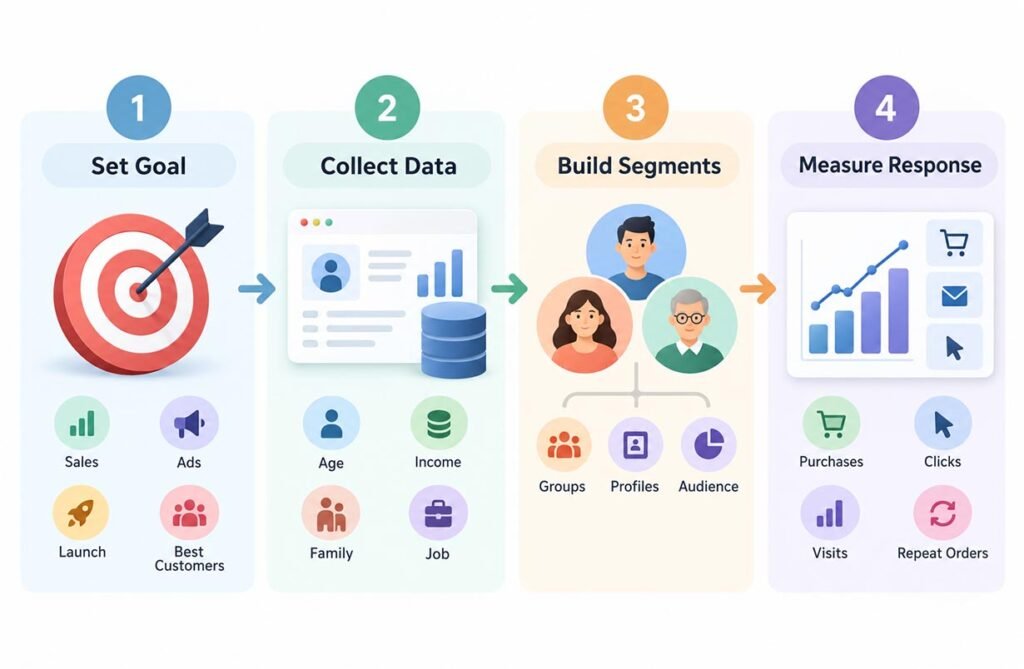
The process normally starts with a clear marketing goal. A company may want to increase sales, improve advertising, launch a product, or understand its best customers. It then selects the demographic factors that are most useful for that goal instead of collecting information that has no clear purpose.
After collecting the data, the business creates meaningful groups and studies how each group responds. Demographic Segmentation becomes more useful when marketers compare these groups with real actions such as purchases, website visits, email clicks, subscriptions, and repeat orders. This helps the company test whether its assumptions match real customer behavior.
Real Marketing Examples
Imagine a fitness business selling online workout plans. It may discover that 18–25-year-old customers prefer short workouts and affordable monthly plans. Working parents may prefer flexible programs that can be completed at home, while older users may search for lower-impact exercises and simple instructions.
A travel company can use the same idea differently. Students may receive budget travel offers, families may see holiday packages with larger rooms, and customers with higher disposable income may receive premium travel options. The business is still selling travel, but the message and offer change according to the needs of each group.
Benefits for Businesses
One major benefit of Demographic Segmentation is better advertising. Businesses can spend more of their budget on audiences that are more likely to need a product. A company selling university preparation courses, for example, does not need to advertise them equally to every age group.
It can also improve product design, pricing, customer service, and communication. If research shows that one segment values affordability, the company may create a basic package. If another group wants extra features and better support, it may offer a premium option. This helps businesses serve different customers without using one solution for everyone.
Demographics vs Other Segmentation Types
Demographic information is only one part of market segmentation. Geographic segmentation groups customers by country, city, region, climate, or another location. Psychographic segmentation studies lifestyle, values, interests, opinions, and personality. These methods answer different questions about the same customer.
Behavioral segmentation focuses on actions such as purchases, product usage, loyalty, website activity, and response to promotions. Two customers may have the same age and income but behave very differently. For this reason, Demographic Segmentation often works best when businesses combine it with behavioral and psychographic data.
Common Mistakes to Avoid
One common mistake is making a segment too broad. A group such as “people aged 18 to 60” includes customers at very different life stages. At the same time, creating hundreds of tiny groups can make campaigns difficult and expensive to manage. A useful segment should be large enough to matter but specific enough to support a clear marketing action.
Another problem is stereotyping. Not every young customer wants cheap products, and not every older customer avoids new technology. Demographic information shows patterns, not personal rules. Marketers should test ideas with real data and avoid making unfair assumptions based only on age, gender, income, or another characteristic.
Building a Better Strategy
Start by deciding what you want to learn. Choose only demographic information that can support the decision. Collect reliable data, build clear customer groups, and compare their interests and actions. A strong segment should be measurable, reachable, useful, and valuable enough for the business to target.
The next step is testing. Create different advertisements, landing pages, emails, prices, or product offers and measure the results. Demographic Segmentation should change when customer behavior changes. Review important measures such as conversion rate, average order value, retention, customer acquisition cost, and repeat purchases to understand which groups create real value.
Using Customer Data Responsibly
Businesses should collect customer information carefully. Customers should understand why important information is requested and how it may be used. Companies should avoid collecting unnecessary personal details simply because the information is available.
Privacy is especially important when handling sensitive information or data about children. Businesses should follow the privacy and marketing rules that apply in their country. Good segmentation should make marketing more relevant without making customers feel watched, judged, or treated unfairly.
FAQs
What is demographic segmentation in simple words?
It means dividing customers into groups using details such as age, income, education, occupation, gender, and family size so marketing can become more relevant.
Why do marketers use demographic data?
Marketers use it to understand their audience, improve advertising, create suitable products, plan pricing, and communicate with different customer groups more effectively.
What are the main demographic variables?
Common variables include age, income, gender, occupation, education, marital status, family size, and life stage. The most useful factors depend on the product and market.
Is demographic data enough for good targeting?
Not always. Demographics show who the customer is, but behavioral and psychographic data can explain what customers do and why they may prefer certain products.
What is the biggest limitation of demographic marketing?
People with similar demographic details can still have very different interests and buying habits. Businesses should therefore test customer behavior instead of relying only on assumptions.