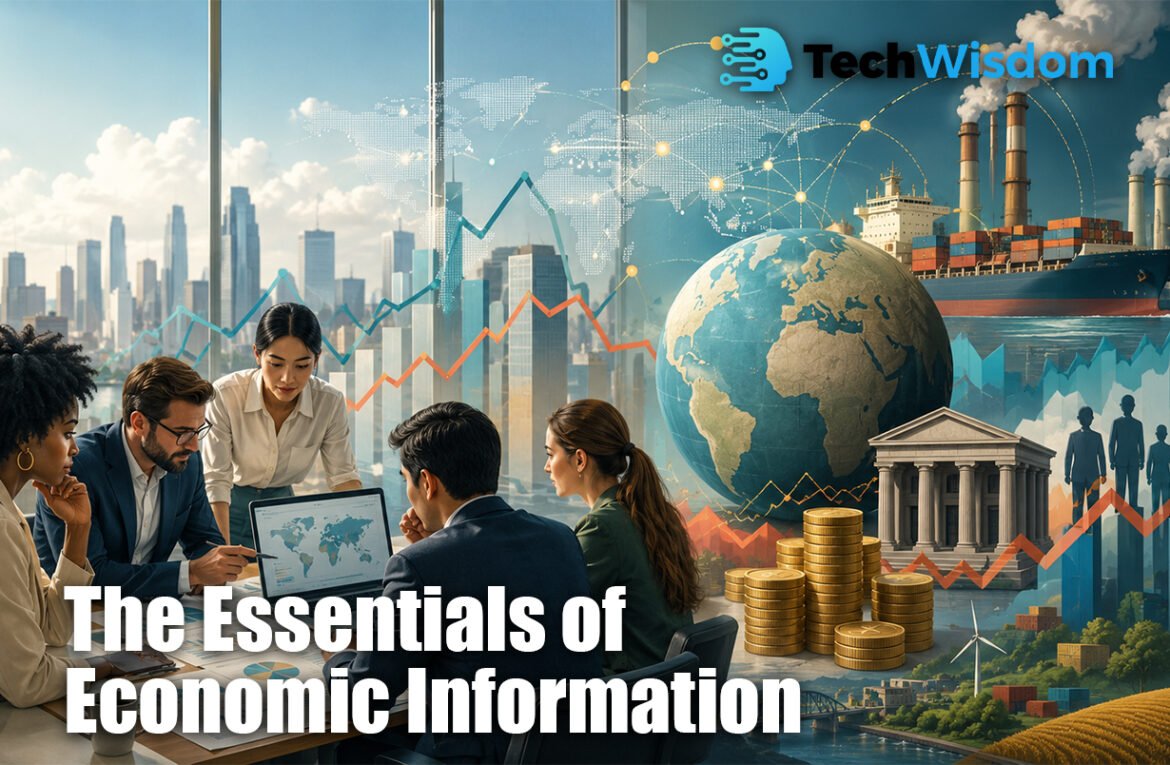
Understanding the Essentials of Economic Information helps people make better choices about money, work, business, and public policy. Economic news can look difficult because it uses numbers and special terms. However, the main ideas are simple when they are explained clearly. By learning how growth, prices, jobs, trade, and interest rates work, readers can understand what is happening in an economy and how these changes may affect daily life.
What Economic Information Really Means
Economic information includes facts, reports, and statistics that describe how an economy is performing. It may show how much a country produces, how fast prices are rising, how many people have jobs, and how much the government spends. It can describe a whole nation, a business sector, a local area, or a group of households.
Learning the Essentials of Economic Information means knowing which facts are useful and how to read them correctly. One figure cannot explain the full economy. A strong understanding comes from comparing several indicators, checking reliable sources, and looking at changes over time instead of reacting to one headline.
Which Economic Indicators Matter Most?
Economic indicators are measurements that show the condition of an economy. The most common ones include Gross Domestic Product, inflation, unemployment, wages, interest rates, public debt, trade, and consumer spending. Each indicator answers a different question and gives a different part of the wider picture.
For example, GDP shows the value of goods and services produced in a country. Inflation shows how quickly prices are changing. The unemployment rate shows how many people in the labour force are looking for work. These figures become more useful when readers study them together.
How GDP Measures Economic Growth
Gross Domestic Product, usually called GDP, is one of the main measures of economic activity. It calculates the total value of final goods and services produced inside a country during a set period. When real GDP rises, the economy is producing more. When it falls, economic activity is becoming weaker.
Readers should understand the difference between nominal and real GDP. Nominal GDP uses current prices, while real GDP removes the effect of inflation. GDP per person is also useful because it divides total production by the population. However, GDP does not fully show poverty, inequality, health, happiness, or environmental damage.
How Inflation Changes Everyday Life
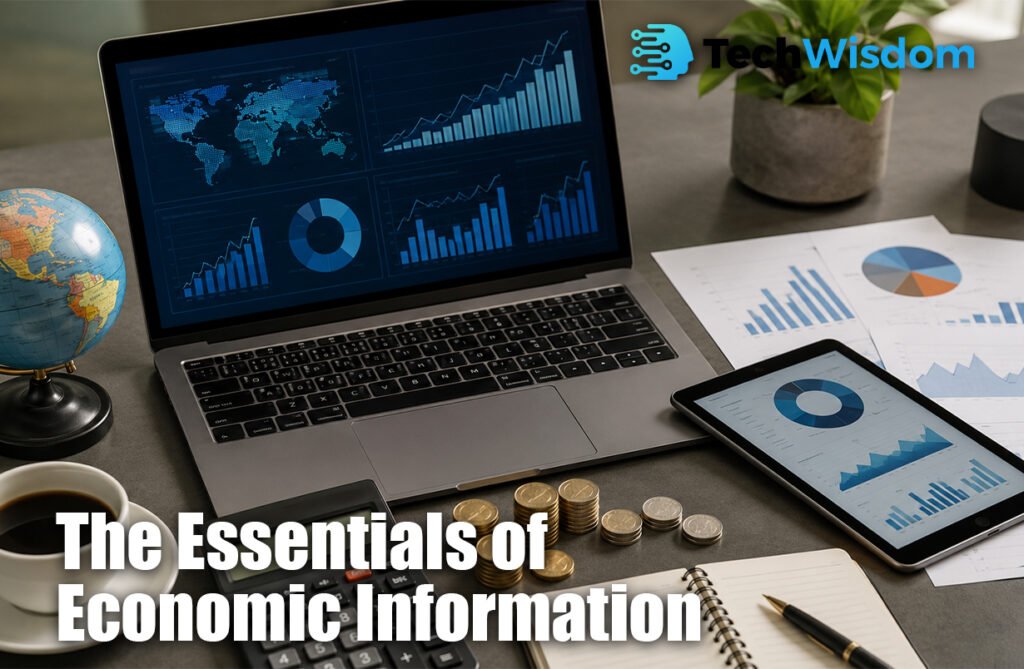
Inflation is a general rise in the prices of goods and services. When inflation increases, money loses some of its buying power. A person may need more money to buy the same food, fuel, clothing, or services. This is why inflation has a direct effect on household budgets and living standards.
A major part of the Essentials of Economic Information is understanding the Consumer Price Index, or CPI. It tracks changes in the prices of a selected group of common products and services. Readers should compare inflation with wage growth. When prices rise faster than wages, people can afford less even if their pay has increased.
How Employment Data Shows Economic Health
Employment data helps explain whether people can find work and earn income. Important figures include the employment level, unemployment rate, wage growth, job vacancies, and labour-force participation. A healthy labour market usually supports household spending, business sales, tax income, and wider economic confidence.
The unemployment rate does not tell the complete story. Some people may stop looking for work and leave the labour force. Others may have part-time jobs but want more hours. For this reason, readers should also study participation, underemployment, wage growth, and job quality before judging the strength of the labour market.
How Interest Rates Affect Financial Decisions
Interest is the cost of borrowing money and the return earned from saving it. A central bank often changes its main interest rate to manage inflation and economic activity. Higher rates can make loans, mortgages, and business finance more expensive. They may reduce spending and help slow price growth.
Lower rates can make borrowing cheaper and support spending, investment, and property demand. However, they can also reduce returns for savers and add to inflation pressure. Understanding rates is an important part of the Essentials of Economic Information because interest decisions can affect homes, jobs, companies, currencies, and financial markets.
How Government Finance Shapes the Economy
Governments collect money through taxes and spend it on healthcare, education, roads, security, social support, and public services. When spending is higher than revenue, the government has a budget deficit. It normally borrows money to cover the difference. When revenue is higher than spending, it has a budget surplus.
Public debt is not always harmful. Borrowing may support growth when it pays for useful infrastructure or services. However, high debt can become risky when interest costs rise or government income remains weak. Readers should compare debt with GDP, economic growth, tax revenue, and borrowing costs instead of judging the total debt figure alone.
How Trade and Exchange Rates Influence Prices
International trade includes exports and imports. Exports are goods and services sold to other countries, while imports are bought from abroad. A trade surplus happens when exports are greater than imports. A trade deficit happens when imports are greater, but this is not automatically good or bad.
Exchange rates show the value of one currency against another. A weaker currency can make imports more expensive, which may increase inflation. It can also make exports cheaper for foreign buyers. A stronger currency may lower import costs but make exported goods more expensive in global markets.
How to Judge Reliable Economic Information
Reliable data usually comes from national statistical offices, central banks, finance ministries, and respected international bodies such as the World Bank, International Monetary Fund, United Nations, and International Labour Organization. Good sources explain their methods, definitions, dates, and possible limits.
When studying the Essentials of Economic Information, check whether a figure is current, revised, estimated, or forecast. Also ask whether it is adjusted for inflation or seasonal changes. Compare the result with earlier periods and related indicators. Economic forecasts are useful, but they are not facts because unexpected events can quickly change future conditions.
How to Use Economic Data in Real Life
Households can use economic information to plan spending, saving, borrowing, and career choices. Businesses can use it to study customer demand, costs, interest rates, and market risks. Investors may follow growth, inflation, company profits, and central-bank decisions before choosing where to place their money.
Mastering the Essentials of Economic Information does not require advanced mathematics. It requires careful reading, reliable sources, and a habit of asking good questions. Look beyond headlines, compare several indicators, and focus on long-term trends. This approach makes economic information more practical and helps people make informed decisions with greater confidence.
FAQs
What are the main types of economic information?
The main types include GDP, inflation, employment, wages, interest rates, trade, government finance, productivity, and household income.
Why is GDP important?
GDP measures the value of goods and services produced in a country. It helps show whether economic activity is growing or falling.
How does inflation affect people?
Inflation raises the cost of living and reduces purchasing power when prices increase faster than wages or household income.
Where can I find reliable economic data?
Use official statistical offices, central banks, government departments, the World Bank, the IMF, and other trusted institutions.
Can one indicator explain the whole economy?
No. Readers should compare growth, inflation, employment, wages, trade, debt, and other indicators to understand the complete situation.