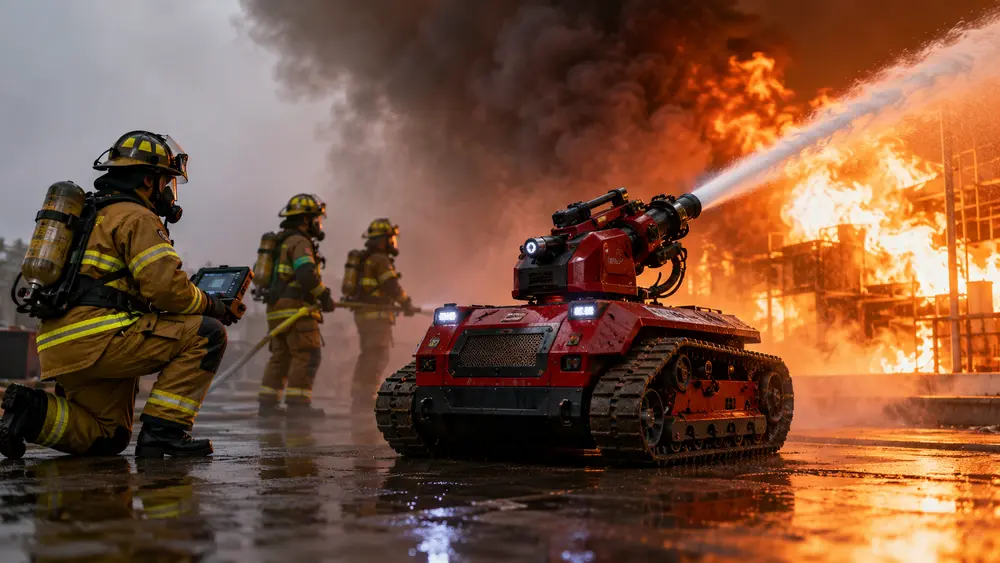
A Fire Fighting Robot is now one of the most useful tools for modern firefighters. It is designed to enter places that are too hot, smoky, or otherwise unsafe for people. It can carry a hose, spray water or foam, send live video, and show heat through a thermal camera. This does not remove the need for brave firefighters. It gives them a safer way to see the danger first, plan the attack, and save more lives with less risk.
What Is a Fire Fighting Robot?
A Fire Fighting Robot is a powerful machine used in firefighting and rescue work. Most models are controlled by a trained operator from a safe distance. Some advanced models can also use sensors and smart software to move with less help.
It can be small, like a rescue scout, or large, like a mini tank. Many use tracks instead of normal wheels, so they can move over broken glass, water, mud, hoses, and debris. Their main job is simple: go near danger before humans do.
Why Modern Firefighters Need This Technology
Modern fires are not the same as old fires. Today, homes, offices, and factories use more plastic, batteries, machines, fuel, and chemicals. These things can make thicker smoke, higher heat, and more toxic air.
A firefighting robot helps firefighters by serving as their first line of defense. It can check a burning room, tunnel, warehouse, aircraft area, or factory zone. This gives the team important facts before they enter.
How It Helps in Real Fire Scenes
In a fire scene, every second matters. Firefighters need to know where the fire is strongest, where smoke is moving, and where the building may be weak. A robot can move forward and send video back to the command team.
A firefighting robot can also cool the area before humans enter. It may spray water on a door, tank, machine, or hot wall. This can reduce heat and slow the fire while firefighters prepare the next step.
Main Parts of the Machine
The body is usually made from strong metal and heat-resistant parts. It protects the motor, wires, battery, cameras, control system, and water parts. Good sealing is also important because water and dust can damage electronics.
A Fire Fighting Robot often includes a water monitor, thermal camera, normal camera, lights, tracks, a remote control, and a communication system. Some models also have gas sensors, speakers, self-cooling spray, and tool arms.
Thermal Camera and Live Video
The thermal camera is one of the most important tools. It sees heat, not normal light. This helps in smoke, darkness, and hidden fire zones. It can show hot spots behind smoke or near doors.
Live video helps the operator see where the robot is going. The incident commander can also watch the same video and make better choices. This is very useful in warehouses, tunnels, and industrial sites.
Water, Foam, and Fire Control
A Fire Fighting Robot may use water, foam, or water mist. Water cools the fire. Foam covers the fuel and prevents oxygen from feeding the flames. Water mist uses tiny droplets to cool the air and reduce smoke.
Some robots connect to a fire hose. Others carry their own tank, but this is usually for small fires. Large fires require a hose connection because they require much more water for a longer period.
Remote Control and Operator Safety
Most robots are remote-controlled. The operator can stand far from the heat, smoke, and blast area. This is important near gas cylinders, fuel tanks, chemical stores, and battery fires.
A Fire Fighting Robot must have a strong signal. Thick walls, metal, tunnels, and underground areas can weaken communication. For this reason, teams often test the signal before sending the robot too far.
Where It Is Used
Fire departments can use this robot in many places. It is helpful in factories, airports, ports, power plants, parking areas, high-risk buildings, ships, tunnels, and large storage sites.
A Fire Fighting Robot is also useful during hazardous-material incidents. If there is a leak, toxic smoke, or explosion risk, the robot can inspect the area and send data while people stay safer.
Benefits for Firefighters
The first benefit is safety. Firefighters can learn about the danger before stepping into it. This can lower the risk of burns, toxic gas exposure, and collapse injuries.
A firefighting robot also saves energy. It can carry hoses, push small debris, and stay near heat longer than a person. This gives firefighters more time for rescue, planning, and final fire control.
Limits and Challenges
This technology is powerful, but it is not perfect. Robots can be costly. They need training, repair, battery care, cleaning, and storage. A fire department must plan for all these needs.
A firefighting robot may also encounter mobility issues. Stairs, deep holes, heavy debris, and fallen walls can stop it. Very high heat can also damage cameras, batteries, and wires if the robot stays too close for too long.
Human Skill Still Matters
A robot cannot replace a trained firefighter. Firefighters understand people, fear, building layout, rescue choices, and changing danger. Human judgment is still the center of the mission.
A firefighting robot is best when it works with a team. The robot goes first, gathers information, and attacks risk areas. The firefighters use that information to make the safest and fastest plan.
Important Testing and Standards
NIST works on test methods for response robots. These tests assess movement, sensors, energy, communication, operator skill, safety, and real-world tasks. These tasks may include finding victims, detecting hazards, opening doors, and turning valves.
These tests matter because emergency tools must work under pressure. A robot should not only look good in a video. It should perform well in heat, smoke, water, noise, and rough ground.
Real Examples in the World
Some well-known robots show how this field is growing. Colossus helped during the Notre-Dame Cathedral fire in 2019 by working inside a dangerous area. Thermite RS3 is another tracked robot used for strong water flow.
Other examples include LUF 60, TAF60, and MVF-5. These machines show that fire robots can be used for airports, industry, military sites, and city fire departments.
Role in Industrial Safety
Factories and fuel sites have special risks. They may store oil, gas, chemicals, paper, plastic, or batteries. A small fire can quickly escalate into a large event.
A firefighting robot can stand near a high-risk zone and respond fast. It can cool tanks, spray foam, check heat, and help teams avoid direct contact with dangerous materials.
Role in Smart Cities
Smart cities use cameras, alarms, maps, sensors, and fast communication. Fire robots can become part of this safety system. They may connect with command rooms and building data.
A firefighting robot can support a smart city by sending live images and heat data. In the future, it may work with drones, map-building, and AI tools to provide faster rescue support.
Future of the Technology
The future will bring better batteries, stronger signals, lighter materials, and smarter navigation. Robots may also use more advanced AI, LiDAR, and thermal mapping to better understand fire scenes.
A firefighting robot may also work with drones. A drone can see the roof or upper floors, while the ground robot attacks the fire below. Together, they can give a full view of the danger.
Buying Tips for Fire Departments
Before buying, a fire department should check water flow, heat rating, battery life, control range, camera quality, service support, and training. Easy controls are very important because emergencies are stressful.
A Fire Fighting Robot should be tailored to the local risk. A city fire station may need a different robot than an oil plant or airport. The best choice depends on buildings, roads, fire type, and budget.
Final Thoughts
A Fire Fighting Robot is not science fiction anymore. It is a real tool for safer, smarter, and stronger emergency response. It helps firefighters see danger, attack fire, and protect lives from a safer distance.
The best future is not robots instead of firefighters. The best future is firefighters with better tools. With good training and the right plan, this technology can make modern firefighting safer for both rescuers and the public.
Read More: Growth Navigate Startup Tools for Teams
Frequently Asked Questions
What is the main use of this robot?
It helps firefighters enter dangerous zones, spray water or foam, and send live video from unsafe places.
Can it replace firefighters?
No. It supports firefighters, but human skill, rescue judgment, and command decisions are still needed.
Where can it work best?
It works best in factories, tunnels, airports, warehouses, power plants, ships, and chemical areas.
Why is a thermal camera important?
A thermal camera shows heat through smoke and darkness, so teams can find hot spots faster.
Is it good for small fire departments?
Yes, but only if the department has the budget, training, storage, and maintenance support.